


SAFETY & PROCEDURES
BEFORE WORK BEGINS
OUR SERVICE FAQs

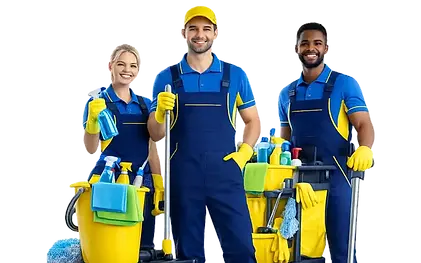
Commercial Cleaning Safety & Procedures
Commercial cleaning safety procedures help cleaning personnel perform recurring work while accounting for the conditions of an active workplace.
Offices, commercial buildings, warehouses and industrial facilities can contain different hazards, access requirements, floor conditions and operational activities.
Cleaning products and equipment also need to be used appropriately for the work being performed. A practical cleaning procedure should therefore consider more than the individual task.
Cleaning personnel need to understand the area being serviced, the products and equipment required, the people or operations around them and any facility-specific procedures that affect the work.
These considerations can then become part of a consistent cleaning process that supports both effective service and safer workplace practices.
Commercial Safety & Procedures


Commercial Cleaning Procedures Start Before Cleaning Begins
Safe cleaning begins with understanding the workplace.
A cleaning provider should know which areas are included in the service, when those areas can be accessed and whether the property has requirements that affect cleaning personnel.
An ordinary office can present relatively straightforward conditions, while a warehouse or industrial property may include forklift routes, shipping activity, production areas or restricted spaces.
The cleaning procedure should reflect those differences. Access arrangements are also important. Keys, access cards, alarm procedures, designated entrances and restricted areas should be established before service begins rather than left for cleaning personnel to resolve during a shift.
The work itself needs to be defined as well. A clear commercial cleaning scope of work identifies assigned areas and responsibilities so personnel understand what work belongs within the recurring cleaning program.
Facility conditions can change after service begins. Construction, maintenance work, temporary equipment, spills or operational changes can introduce circumstances that were not present when the cleaning program was originally established.
Cleaning personnel should have a practical way to communicate these conditions instead of proceeding as though the environment has remained unchanged.
Cleaning Chemicals Require Appropriate Handling and Use
Commercial cleaning can involve different products for floors, washrooms, glass, surfaces and other applications. Products should be appropriate for their intended use and handled according to applicable instructions and workplace procedures. Cleaning personnel should understand what product they are using and avoid assuming that stronger concentrations or combining products will produce better results.
Product Procedures Should Be Consistent
A consistent chemical procedure helps reduce unnecessary variation in how cleaning products are prepared and used. Products requiring dilution should be prepared according to the applicable directions. Containers should be handled and stored appropriately, and product identification should remain clear.
Cleaning chemicals should not be mixed unless the product system specifically calls for it. Combining incompatible products can create dangerous conditions. The cleaning method should also correspond with the surface. A product appropriate for one material may not be suitable for another, making surface compatibility part of proper cleaning procedure.
Where a workplace has specific chemical requirements or restrictions, those conditions should be established as part of service planning. JaniTech's broader cleaning compliance and safety information addresses workplace considerations involving cleaning products, PPE, site hazards and commercial facility requirements.
Personal Protective Equipment Should Match the Cleaning Task
Personal protective equipment should correspond with the work being performed and the conditions present. Not every cleaning task requires identical PPE. The products being used, potential exposure, facility requirements and type of cleaning work can all influence what is appropriate.
Gloves are commonly associated with many cleaning activities, while other protective equipment may be required depending on the product, procedure or workplace environment.
Industrial facilities can also impose site-specific PPE requirements unrelated to the cleaning chemical itself. Cleaning personnel entering an operational area may need to follow the same applicable site rules established for other people working in that environment.
PPE Is Part of the Procedure, Not a Substitute for It
Protective equipment should operate alongside appropriate work practices. Using PPE does not make an unsuitable cleaning method appropriate, nor does it replace the need to follow product directions or facility procedures. The cleaning task should first be considered in terms of the environment, product and method. Appropriate protective measures can then be applied to the work.
PPE also needs to remain usable. Damaged or unsuitable protective equipment should not be treated as equivalent to equipment capable of performing its intended function. A consistent cleaning program should make task-specific safety practices part of normal service rather than something considered only after a problem occurs.
Wet Floors and Cleaning Equipment Require Control Around Occupants
Floor cleaning creates one of the most visible interactions between janitorial work and building occupants. Cleaning may temporarily change floor conditions, and equipment can occupy space normally used by employees, customers or visitors. The work should therefore be planned around the surrounding environment.
Where cleaning creates a temporarily wet surface, appropriate procedures should be used to identify or manage the affected area while work is taking place. Timing can reduce unnecessary interaction as well. High-traffic areas can sometimes be cleaned during periods of reduced occupancy rather than at their busiest point of the day.
Equipment placement also matters. Cords, machines, carts and cleaning supplies should not be positioned without considering pedestrian routes and workplace activity. The cleaning process should avoid creating unnecessary obstacles in entrances, corridors and other circulation areas. The same principle becomes particularly important in industrial and warehouse facilities, where pedestrian traffic can overlap with material-handling equipment.
JaniTech's high-traffic commercial area cleaning guide explains how cleaning frequency and service timing can be structured around heavily travelled spaces.
Cleaning Around Industrial and Warehouse Operations Requires Coordination
Industrial and warehouse properties can create cleaning conditions that differ substantially from ordinary office environments. Forklifts, pallet jacks, loading operations, production equipment and employee movement can remain active while cleaners are working. Cleaning procedures should account for these activities rather than expecting operations to stop automatically.
Access Should Follow Operational Conditions
Some areas can be cleaned safely and effectively while the facility remains active. Others may require a lower-activity period, shift change or another appropriate service window. The cleaning schedule should identify these conditions where possible. Personnel should also respect restricted or controlled areas. A recurring cleaning scope does not override site access procedures.
Communication becomes particularly important when operational conditions change unexpectedly. Equipment, pallets, production activity or temporary work can make an area inaccessible even when it would normally be included in the cleaning schedule. The appropriate response may be to defer the work, coordinate access or report the condition rather than attempting to complete the task under unsuitable circumstances.
The industrial facility cleaning manual explains how recurring cleaning can be structured around production areas, employee facilities, shifts and active industrial operations.
Cleaning Procedures Should Reduce Cross-Contamination Between Areas
Commercial facilities contain areas with very different cleaning conditions. A washroom should not automatically be treated the same way as an office workstation or employee kitchen. Cleaning procedures can account for these differences through appropriate equipment use, work sequence and handling practices.
Tools and materials used for higher-contamination areas should be managed appropriately rather than being transferred indiscriminately throughout the facility. The order in which areas are cleaned can also form part of the procedure. Planning the workflow can reduce unnecessary movement between areas and help cleaning personnel complete the assigned work consistently.
Waste handling should follow the responsibilities established for the facility. Ordinary commercial waste may form part of recurring janitorial service, while unusual materials or waste requiring specialized handling should be identified separately. Restrooms deserve particular attention because multiple fixtures and frequently contacted surfaces are concentrated within a relatively small space.
The commercial restroom cleaning standards guide provides a more detailed framework for washroom cleaning responsibilities and recurring maintenance. Procedures should remain appropriate to the actual facility rather than introducing complexity that serves no practical purpose.
Training, Reporting and Review Keep Procedures Effective
Written procedures alone do not ensure consistent cleaning. Personnel need to understand the work they are expected to perform, the methods applicable to that work and any facility requirements affecting their service. Changes should also be communicated. A customer may introduce a new restricted area, alter operating hours or change access procedures. New flooring or facility modifications can affect cleaning methods. An industrial operation may change production layouts or traffic routes. Cleaning procedures should be updated when those changes materially affect the work.
Report Conditions That Affect Safe or Complete Service
Cleaning personnel can encounter conditions that prevent a task from being completed normally. Restricted access, unexpected equipment, damaged surfaces, unusual spills or active work by another contractor can all affect service. These circumstances should be communicated rather than concealed or ignored.
Reporting creates a record of why work was affected and allows the facility or cleaning provider to determine an appropriate response. The same system can help identify recurring conditions. If the same access problem repeatedly prevents cleaning in one area, the schedule or procedure may need to change.
JaniTech's cleaning inspection and service reporting guide explains how deficiencies, facility conditions and follow-up can be documented as part of an ongoing cleaning program.
Commercial Cleaning Safety Procedures FAQs
Q: What are commercial cleaning safety procedures?
A: Commercial cleaning safety procedures are practices used to perform cleaning while accounting for products, equipment, floor conditions, building occupants and workplace hazards. Procedures can include chemical handling, appropriate PPE, equipment use, access requirements, work sequencing and communication of unsafe or unusual conditions.
Q: Do commercial cleaners need personal protective equipment?
A: Appropriate PPE depends on the cleaning task, products being used, potential exposure and facility requirements. Different tasks and workplaces can require different protective measures, so PPE should correspond with the actual work rather than relying on one universal requirement.
Q: How should cleaners work around employees and customers?
A: Cleaning should be scheduled and performed with consideration for building occupants. Work methods, equipment placement, temporarily wet floors and access to busy areas should be managed appropriately. Where possible, particularly disruptive tasks can be scheduled during lower-traffic periods.
Q: Are industrial cleaning safety procedures different from office cleaning?
A: They can be. Industrial facilities may involve material-handling equipment, production operations, restricted areas, additional PPE requirements and more complex access conditions. Cleaning procedures should reflect the hazards and operating requirements of the individual workplace.
Commercial cleaning safety is most effective when appropriate procedures are built into ordinary service rather than treated as a separate activity.
The process begins with understanding the facility and assigned scope. Cleaning products, equipment and protective measures can then be selected according to the work, while scheduling and access procedures account for employees and workplace operations.
Communication completes the system. Cleaning personnel should be able to report conditions that affect their work, and procedures should be reviewed when facility conditions change.
This approach supports consistent cleaning across offices, commercial buildings, warehouses and industrial workplaces without assuming that every property presents the same conditions.
A structured commercial cleaning service process can incorporate scope, scheduling, access, procedures and ongoing quality review into the recurring program. Businesses can also review JaniTech's commercial cleaning services for workplaces for broader service information.
Ontario businesses and facility managers ready to establish recurring service can provide their requirements through the commercial cleaning service request form. Facility conditions, operating requirements and cleaning responsibilities can then be considered when developing the program.