



Commercial Entrance Cleaning for Ontario Facilities
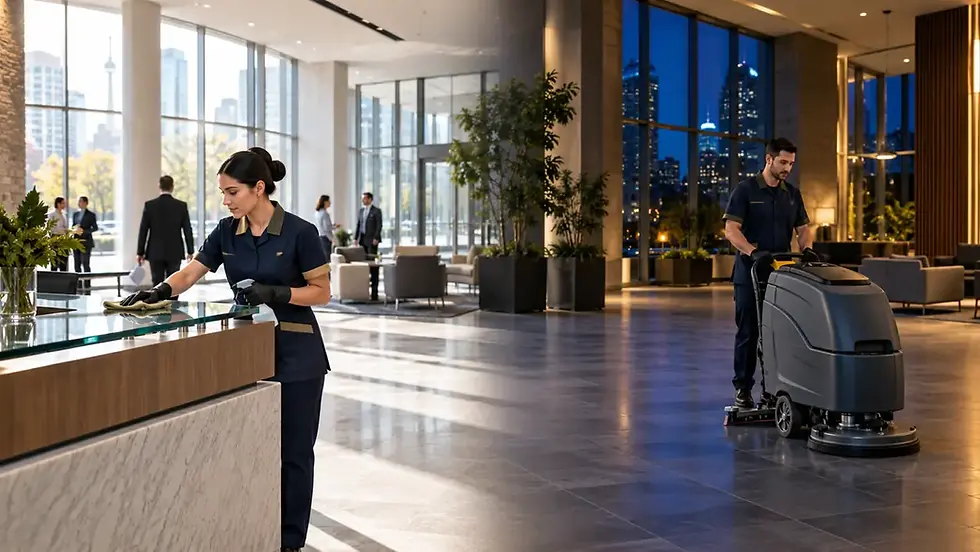
Commercial entrance cleaning for Ontario facilities involves more than maintaining the small area immediately inside the front doors. An entrance can include exterior-facing glass, door hardware, vestibules, mats, hard flooring, reception approaches and the first sections of adjoining corridors.
Because almost every occupant and visitor passes through this zone, soil and moisture can accumulate quickly and travel farther into the property. A defined entrance-cleaning program helps contain that transfer while maintaining an orderly arrival area for employees, customers and visitors.
What Commercial Entrance Cleaning Should Include
A commercial entrance is a connected group of surfaces rather than a single floor area. Glass doors can collect fingerprints and weather-related marks. Door handles and push plates receive repeated contact. Mats trap soil and moisture carried in from outside, while the surrounding hard floors receive anything the matting does not capture.
Cleaning responsibilities should follow this complete entry sequence. Maintaining the glass while leaving debris around the mat edges does not produce a consistently maintained entrance. Cleaning only the floor can also leave visible marks on doors, frames and nearby surfaces.
The required work depends on the entrance design. Some buildings have a compact doorway leading directly into a lobby. Others use a vestibule with two sets of doors, several matting zones and a reception area. Commercial properties may also have separate public, employee, shipping or controlled-access entrances with different traffic levels.
JaniTech provides Ontario commercial cleaners for active business facilities with cleaning programs developed around the actual layout, traffic and operating requirements of each property.
Entrance Cleaning Begins With the Way People Use the Building
The most important entrance is not always the one identified as the main entrance on the building plan. Employees may use a side door, deliveries may move through a service entrance, and customers may arrive through a parking structure or connecting corridor. Each access point can create a different cleaning demand.
Traffic volume matters, but the type of traffic also affects conditions. Foot traffic transfers soil differently from delivery carts, wheeled cases or material-handling equipment. An entrance serving a warehouse may experience different debris from one serving a professional office, medical property or customer-facing facility.
The cleaning plan should identify where people and equipment enter, which routes they follow and where tracked-in material becomes visible. This makes it possible to address the source and transfer path rather than repeatedly cleaning only the final area where the soil settles.
A practical assessment should also consider peak periods.
Morning arrivals, shift changes, deliveries, appointments and scheduled events can create concentrated use. Cleaning immediately before a major traffic period may produce only a short-lived result, while service after the peak may restore the area more effectively.
Entrance Matting Controls Soil Before It Spreads
Commercial entrance matting is intended to capture moisture, grit and other material before it reaches interior flooring. Its performance depends on its size, placement, condition and capacity. A mat that is too short, incorrectly positioned or saturated may allow substantial material to pass into the lobby.
Matting also requires cleaning. Dry soil can settle within the fibres, while moisture can remain below the visible surface. Debris often accumulates along the edges where the mat meets the surrounding floor. These areas can be missed when cleaning is limited to a quick pass over the exposed surface.
The method used should correspond to the mat’s construction and condition. Routine vacuuming can remove loose material, while heavier accumulation may require a more involved cleaning method. Mats should also remain flat and correctly positioned so they do not create an obstruction or leave part of the intended traffic route unprotected.
Matting does not eliminate the need to clean surrounding floors. It is one component of an entrance-control system. Its purpose is to reduce the amount of contamination moving farther into the building and make the remaining floor-cleaning responsibilities more manageable.
Doors, Glass and Contact Surfaces Shape the First Impression
Entrance glass makes fingerprints, dust, streaks and weather-related marks highly visible. Even when the floor is clean, marked glass can make the entry area appear neglected. The appropriate cleaning frequency depends on traffic, weather exposure, door operation and how prominently the glass is positioned.
Door handles, push plates and accessible frames may require attention during regular service. Their repeated use can leave visible contact marks that affect the appearance of the entire doorway. Automatic-door glass can also collect marks at the heights where people, carts or belongings regularly make contact.
Cleaning should extend only to surfaces that can be reached and serviced safely under the agreed scope. High exterior glass, specialized façade systems and inaccessible architectural features may require separate equipment or a specialized service arrangement.
Interior entrance glass and contact surfaces should be coordinated with floor cleaning. Cleaning the glass after the surrounding floor has been completed may reintroduce drips or debris. Sequencing the work helps produce a consistent result across the entire entrance.
Entrance Floors Need Surface-Specific Cleaning
Commercial entrance floors can include ceramic tile, resilient flooring, finished VCT, stone, concrete, carpet or combinations of several materials. Each surface responds differently to moisture, grit, cleaning products and equipment.
Loose debris should generally be removed before wet cleaning begins. Fine grit can be abrasive, and spreading it through a damp process can extend the affected area. The selected cleaning method should remove soil without leaving residue or applying unnecessary moisture.
Finished floors require particular attention because entrance traffic can create concentrated wear. Soil carried across the same route can gradually dull the finish even when the remainder of the floor remains in acceptable condition. Protecting these areas through routine soil control can help delay the need for more extensive restorative work.
Facilities with finished flooring can review JaniTech’s guidance on protecting commercial floor finish from tracked-in entrance soil for a broader explanation of routine maintenance, localized wear and compatible cleaning practices.
Cleaning Frequency Should Reflect Traffic and Weather
An entrance may need a different cleaning frequency from the rest of the building. It can collect new soil every time someone enters, while a private office or low-use room remains relatively stable between cleaning visits.
Frequency should consider occupancy, visitor volume, operating hours, deliveries and exterior conditions. A lightly used employee entrance may require attention during regular service. A public entrance serving a high-volume facility may need inspection or touch-up cleaning during the operating day.
Ontario weather can change these requirements quickly. Rain, snow, slush and road salt can increase moisture and soil transfer even when building occupancy remains unchanged. Dry periods can create different concerns, including dust, sand and fine debris.
The schedule does not need to treat every day as though conditions are identical. It should establish routine responsibilities while allowing the facility and cleaning provider to respond when traffic or weather creates a measurable change.
JaniTech’s guide to concentrated cleaning demand in high-traffic commercial areas explains why entrances and circulation routes may need service frequencies separate from the broader building schedule.
Entrance Inspections Should Review the Whole Zone
An entrance inspection should assess more than whether the centre of the floor appears clean. Mat edges, corners, door tracks, glass, handles and the transition into adjoining areas can reveal whether the cleaning method and frequency are controlling the complete entry zone.
Inspection timing affects what the reviewer sees. An area inspected immediately after service should show whether the work was completed properly. An inspection after a busy arrival period shows how well the entrance remains controlled under actual use. Both observations can provide useful information, but they answer different questions.
Repeated soil beyond the matting may indicate that the entrance-control arrangement is not capturing enough material. Persistent streaks can point to a product, method or sequencing issue. Rapid re-soiling may show that the service frequency does not match traffic conditions.
The objective is not to expect an active entrance to remain untouched throughout the day. It is to determine whether the agreed cleaning program is controlling predictable conditions and whether adjustments are needed.
Commercial Entrance Cleaning FAQs
Is How Often Should a Commercial Entrance Be Cleaned?
The appropriate frequency depends on traffic, operating hours, weather, matting and the surfaces within the entrance. Some entrances can be maintained during regular scheduled service, while heavily used areas may need inspections or additional attention during the day.
What Areas Are Included in Commercial Entrance Cleaning?
Entrance cleaning can include accessible door glass, handles, push plates, frames, vestibules, mats, hard floors and the immediate route into the lobby or building. The exact responsibilities should be defined in the cleaning scope.
Why Does Soil Continue Past Commercial Entrance Mats?
Matting has limited capacity and may not capture all moisture or debris. Soil can spread when mats are saturated, too short, incorrectly positioned or unable to cover the full traffic route. Wheeled traffic can also carry material beyond the matting zone.
Can Entrance Cleaning Help Protect Commercial Floors?
Yes. Removing grit, moisture and residue near their point of entry can reduce the amount carried across interior flooring. Routine entrance maintenance cannot prevent all wear, but it can help control one of its major sources.
Build Entrance Cleaning Around the Property’s Traffic
Effective commercial entrance cleaning begins with understanding how the property is entered and how soil moves beyond the doorway. Doors, glass, matting, flooring and adjoining traffic routes should be treated as one connected zone rather than unrelated cleaning tasks.
The appropriate program will depend on the facility’s layout, occupancy, weather exposure and operating schedule. Clear responsibilities and condition-based inspections allow the entrance to be maintained without applying the same frequency or method to every area of the building.
Ontario businesses can arrange an estimate for a facility-specific entrance cleaning program with JaniTech.